The word “Punk” carries a weight that transcends simple fabric and thread. It is a philosophy, a sonic explosion, and a visual middle finger to the status quo. While the movement technically took root in the mid-1970s, it was the 1980s that refined the “Punk” look into the aggressive, spiked. And leather-clad aesthetic that remains etched in the collective consciousness. Today, walking down a high-street or scrolling through social media, the ghost of 1982 is everywhere. From safety-pin accents to oversized combat boots.
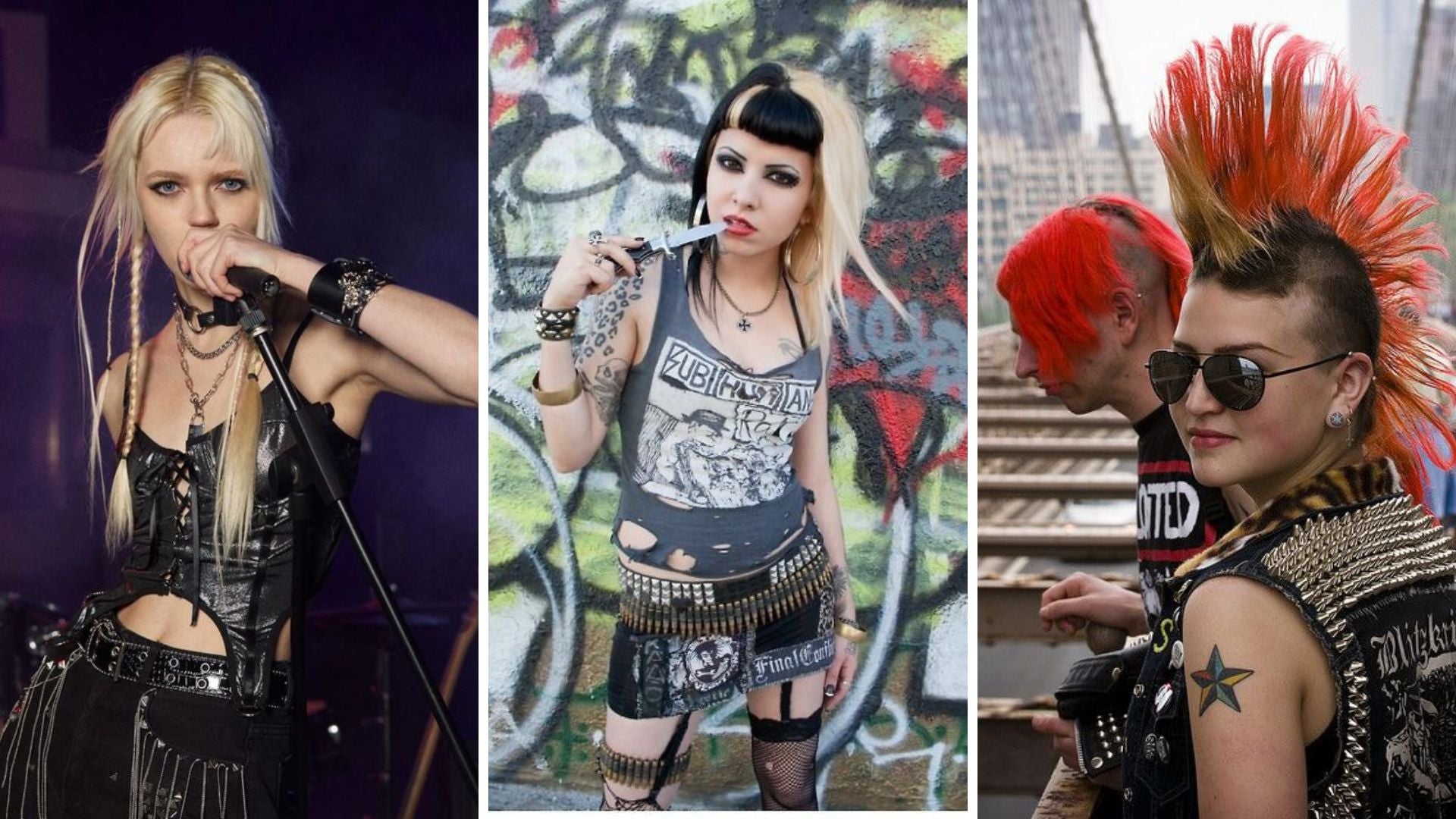
Understanding how the gritty, DIY rebellion of the 1980s transformed into a dominant force in 2026 fashion requires looking at both the history of the movement. And the technical ways those elements have been “remixed” for a modern audience.
The 1980s: The Era of Hardcore and Hard Leather
In the 1980s, punk evolved from the art-school provocations of the Sex Pistols into something faster, harder, and more visually extreme. As the UK and the US faced economic shifts and political tension. The youth responded by wearing their frustration on their sleeves—quite literally.
1. The DIY Ethos and Deconstruction
Punk in the 80s was born out of necessity. If you couldn’t afford new clothes, you tore up your old ones. Rips weren’t a factory-made style choice; they were a badge of survival. Safety pins were used to hold together falling garments, eventually becoming an intentional decorative element. This “Deconstruction” meant that clothing was never finished; it was a work in progress, often adorned with hand-painted band logos (like The Exploited or Black Flag) using stencils and bleach.
2. The Hardware of Rebellion
The 80s introduced a heavy focus on metal. Studded belts, spiked leather jackets (the iconic “Perfecto” style), and heavy chains were used to create a “warrior” silhouette. This wasn’t just fashion; it was armor for the mosh pit. Combat boots, specifically Dr. Martens, became the universal footwear of the movement, chosen for their durability and “blue-collar” roots.
3. Hair and Makeup as Visual Warfare
The 80s saw the rise of the mohawk and the liberty spike. Using everything from hairspray to literal gelatin, punks defied gravity to create hair that functioned as a visual alarm. Makeup was no longer about traditional beauty; it was about theatricality, featuring heavy black eyeliner and bold, unnatural colors that blurred gender lines and challenged societal norms.
The Modern Interpretation: Neo-Punk and “Soft” Rebellion
Fast forward to the mid-2020s, and punk is no longer an underground secret. It has been absorbed by high fashion and “Core” culture (such as Punkcore or Grunge-core). However, the modern version is less about political anarchy and more about personal expression and sustainable “upcycling.”
1. The Rise of Sustainable DIY
The original punk ethos of “fixing and making” has found a perfect home in the modern sustainability movement. In an era where “Fast Fashion” is criticized, the punk tradition of “Thrifting and Flipping” has become mainstream. Gen Z and Millennial fashionistas are using 80s punk techniques—bleaching, distressing, and patchwork—to give new life to secondhand clothes. The “Safety Pin” has returned, but often as a sophisticated gold or silver accessory on a designer blazer.
2. High-Fashion Punk: From the Pit to the Runway
In 2026, luxury brands have fully embraced punk silhouettes. We see oversized leather jackets paired with delicate silk skirts, a “juxtaposition” style that traces its roots back to Vivienne Westwood. The heavy combat boot has been reimagined with chunky “platform” soles, becoming a staple for everyone from suburban teenagers to high-fashion models. The aggression of the 80s has been polished into a sleek, “cyber-punk” aesthetic that utilizes technical fabrics alongside traditional leather.
3. Digital Punk and the Aesthetic of the Internet
Today’s punk fashion is heavily influenced by digital subcultures. “E-kids” and “Alt” creators on platforms like TikTok have taken 80s elements—like fishnet tops, plaid skirts, and layered chains—and mixed them with anime aesthetics and Y2K trends. This “Digital Punk” is highly curated and visual, focused more on the “look” of rebellion than the literal “riot” of the 80s.
Key Comparisons: Then vs. Now
To understand the shift, we can look at specific items that have stood the test of time:
- The Leather Jacket: In the 80s, it was a heavy, hand-painted shield. Today, it is often faux-leather, tailored for a specific fit, and worn as a “statement piece” rather than daily armor.
- Tartan and Plaid: Once a way for British punks to mock the “establishment” and royalty, plaid is now a universal symbol of “alternative” style, found in everything from high-end trousers to casual streetwear.
- The Piercing: In the 80s, multiple ear or facial piercings were seen as shocking and “unemployable.” Today, curated “ear stacks” and septum rings are widely accepted in professional environments, showing how punk’s visual language has integrated into the mainstream.
Why Punk Endures in 2026
The reason punk fashion never truly dies is that it represents the “Underdog.” Every generation reaches a point where they feel the need to rebel against the polished, perfect images presented by mainstream media. Punk provides a toolkit for that rebellion. Whether it’s 1986 or 2026, the act of taking something “broken” and making it “beautiful” is a powerful human impulse.
Moreover, the versatility of the punk aesthetic allows it to adapt. It can be loud and neon, or dark and gothic. It can be expensive and “Couture,” or cheap and “Thrifted.” This flexibility ensures that as long as there is a status quo to challenge, there will be someone in a studded jacket and combat boots ready to challenge it.
Conclusion
The journey of punk fashion from the sweaty basements of the 1980s to the global runways of today is a testament to the movement’s raw energy and creative brilliance. While the political urgency of the 80s may have mellowed, the visual vocabulary—the studs, the plaid, the leather, and the DIY spirit—remains a vital part of our cultural fabric.
Modern punk fashion is a bridge between the past and the future. It honors the “No Future” nihilism of the 80s while adapting to the “Eco-Conscious” and “Digitally Connected” world of the present. Whether you are a “hardcore” devotee or someone who just likes the look of a well-worn combat boot, you are participating in a 50-year-old tradition of defiance. Punk isn’t just a trend; it’s a permanent stain on the world of fashion—and it looks better than ever.